BlogOctober 19, 2026
Does AI Read Reddit for Your Brand? Category and Model Decide

Ambika SharmaFounder at Pulp Strategy Communications and NeuroRank.


Founder at Pulp Strategy Communications and NeuroRank.
Subscribe for Newsletters
A board benchmark needs a defined cohort. Full-audit Combined High inclusion in the AI Visibility Index 2026 ranged from 36.5 percent in professional services to 70.1 percent in BFSI. Combined is internal synthesis; the sector cohorts and prompts differ. These figures cannot substitute for the brand’s current inclusion or recommendation scores.
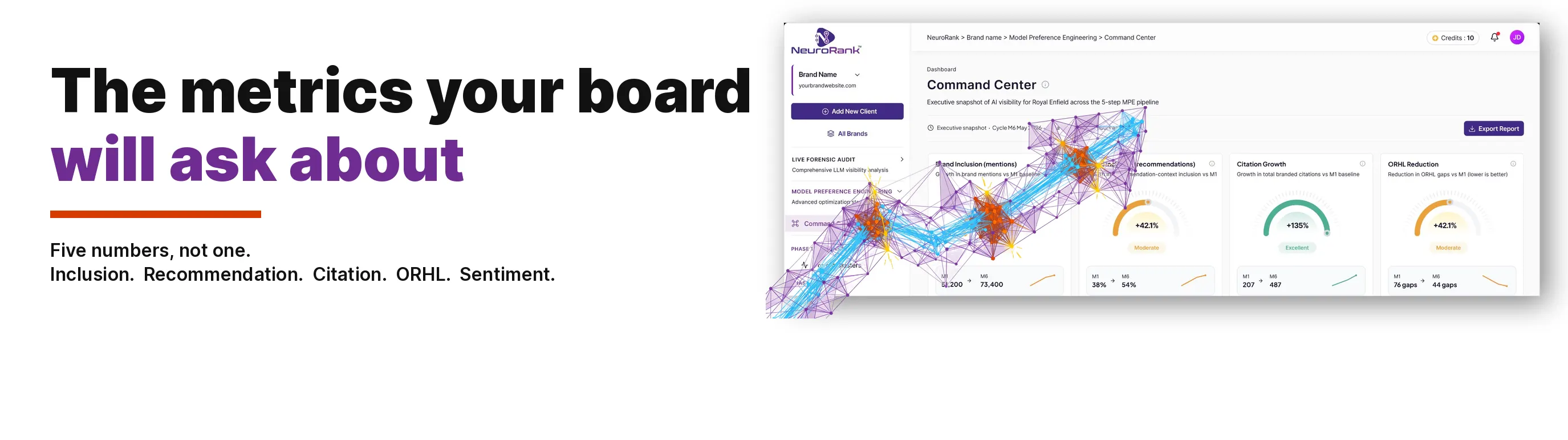
Report the three named AI visibility scores with their denominators, then show ORHL conditions and relevant sentiment examples. Each answers a different leadership question: whether the brand is named, recommended when named, supported by a citation, or described with a material error. Keep platform, country, period, and sample scope visible.
Brand Inclusion Score equals valid tracked responses naming the brand divided by all valid tracked responses, multiplied by 100. Show the count behind the rate, invalid-response exclusions, and the platform and prompt cohort. A larger sample cannot compensate for prompts that do not match the business question.
Brand Recommendation Score equals responses recommending the brand divided by responses naming the brand, multiplied by 100. A neutral mention raises inclusion but not recommendation. Recommendation Rate uses a different denominator, eligible recommendation-intent responses, and must be labelled separately. Neither score measures buyer action.
Brand Citation Score equals valid tracked responses with a brand-owned or brand-supporting citation divided by valid tracked responses, multiplied by 100. Preserve the supporting URLs and source types. A citation may help verification without directing the reader to the brand, so report the Zero Leads reader-path flag separately.
Report Omitted and Replaced states separately from Hallucinated and Zero Leads flags. Show eligible counts and rates against the same prompt cohort. A lower count after reducing the sample is not improvement. A cited page is evidence for review, not a proven cause of the condition.
Sentiment describes the tone or characterization in the captured answer. Preserve examples and distinguish factual error from supported criticism. Report it beside the three named scores when material; sentiment alone does not establish a lost sale or explain a recommendation.
Avoid blended scores without formulas, changing prompt universes, and isolated screenshots presented as trends. The Index’s 63 complete-four-model audits had a median 33.3-point span between highest and lowest observed High-inclusion rates, but the prompt panels were unmatched. Keep platform differences visible and use comparable engagement data for decisions.
Read AI search revenue attribution. Read AI model drift. Read The ORHL framework: four ways a brand disappears in AI answers. |
Stop paying for clicks that do not convert. Benchmark your AI visibility today with the world's most advanced seo ai tools.
Book a Strategic NeuroRank BriefingShow the numerator, denominator, exclusions, and cohort change beside the percentage. Recompute a comparable view on the stable eligible cohort where the method permits, and label any expanded or reduced scope. Leadership should be able to distinguish changed performance from a changed measurement population.
Use the approved aggregation method and retain the underlying response counts. A simple average of country percentages gives each country equal weight, which may differ from response-weighted aggregation. State the method and business purpose explicitly so readers can interpret the aggregate and inspect important market differences.
Present the measures separately, with their eligible cohorts and material examples. Explain which factual issues changed and which discovery questions lost brand inclusion. A combined score can obscure the tradeoff, so the report should let leadership assess answer quality and recommendation coverage on their own evidence.