BlogOctober 19, 2026
Does AI Read Reddit for Your Brand? Category and Model Decide

Ambika SharmaFounder at Pulp Strategy Communications and NeuroRank.
Founder at Pulp Strategy Communications and NeuroRank.
Subscribe for Newsletters
AI visibility varies by platform and prompt. The AI Visibility Index 2026 recorded 40.4 percent High inclusion across 1,920 Perplexity rows and 20.7 percent across 2,151 Gemini rows. Those unmatched panels describe the captured sample, not a controlled model contest. High inclusion is a historical rating, not a recommendation or current Brand Inclusion Score.
AI visibility is whether ChatGPT, Gemini, Claude, and Perplexity name your brand when someone asks a question in your category. A buyer asks for the best option and the model returns a short list of named brands. Your brand is on that list or it is absent from the decision, and an answer has no second page. AI visibility measures how often, how prominently, and how accurately each model names you.
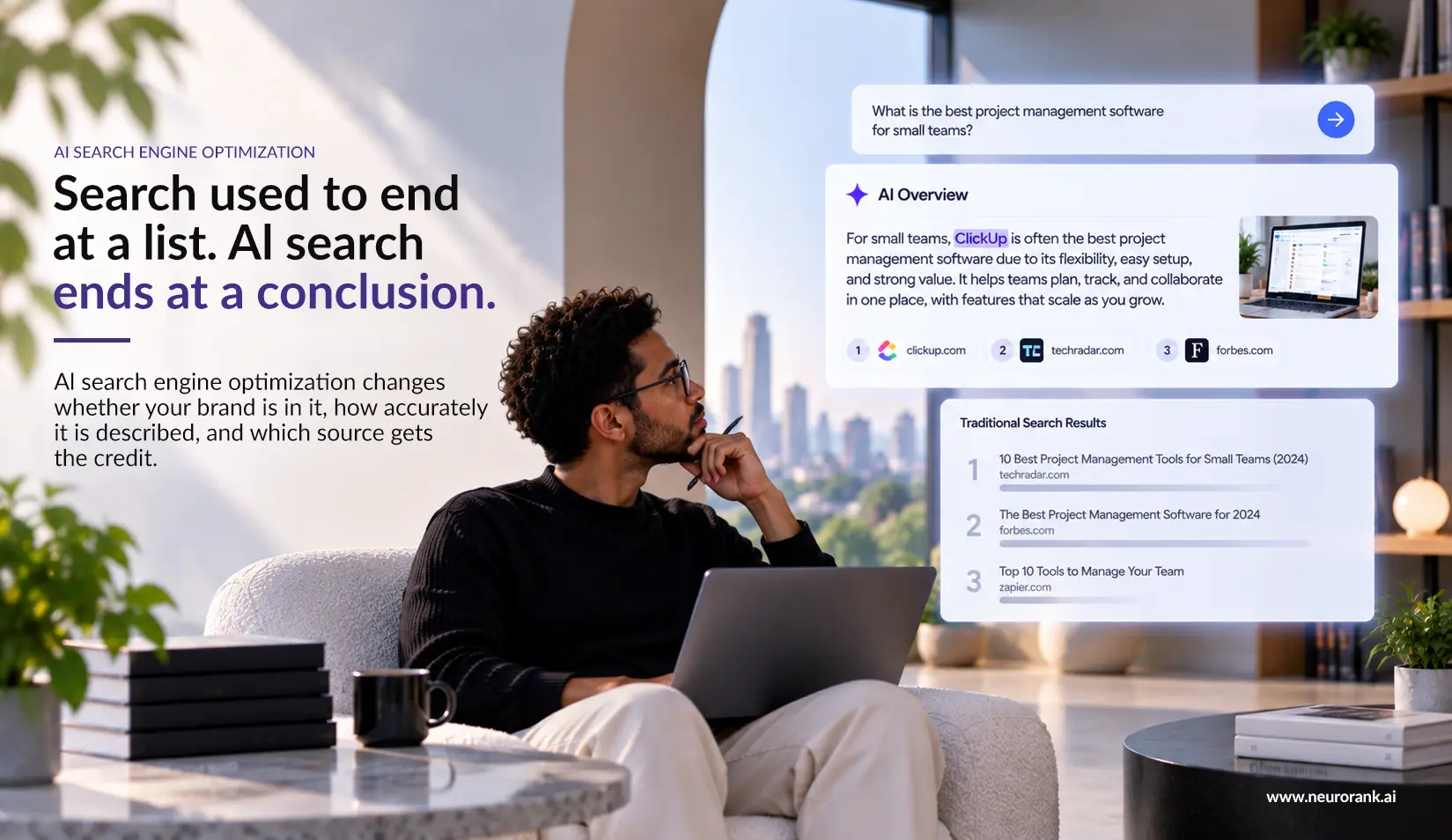
AI answers create another place where buyers can encounter or miss a brand. Measure whether the brand appears for relevant questions, how it is described, and which sources support the answer. A traffic forecast or a consumer survey is context, not a measurement of the brand’s own lost demand.
Depending on the feature, an answer can use retrieved sources, model knowledge, and user context. Record the cited pages and compare their claims with official facts. Uncited material remains an evidence gap; it cannot be assigned to a specific source from the answer alone.
SEO and AI visibility overlap on access, relevance, and reliable content. They differ in what the report observes: ranked results versus generated answers and source citations. Google’s AI features build on Search systems. A strong organic position helps neither prove nor rule out inclusion in a particular answer.
Omitted and Replaced describe primary recommendation states when the brand is absent. Hallucinated flags a false claim about a named brand. Zero Leads flags a named brand with no usable reader path back to it. A recommendation can still carry either quality flag, so report these separately.
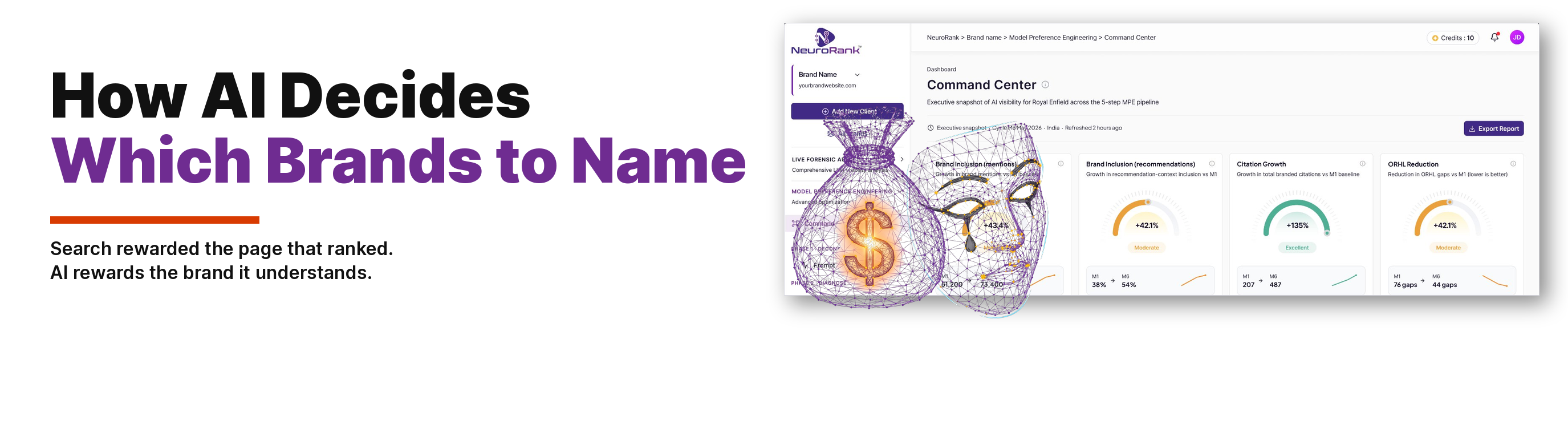
NeuroRank reports how often each model names the brand as the Brand Inclusion Score, computed per prompt, per cluster, and per model from fresh-token runs. The controlled setup reduces carryover from prior NeuroRank conversations so the result can be compared across cycles; individual consumer experiences may still vary by account state, location, memory settings, model version, retrieval behavior, and other context.
Improving AI visibility means working on the sources the models read, not only your own page. Four moves follow. Publish clean, specific, extractable facts about the brand. Earn consistent, accurate presence across the third-party sources each model retrieves and cites. Correct anything the models have wrong at the source they read. Re-measure every month, because the models and their sources change. That loop is what NeuroRank was built to run. The first step is seeing the current picture. A NeuroRank report shows how all four models describe a brand today, and which sources they trusted to do it.
Stop paying for clicks that do not convert. Benchmark your AI visibility today with the world's most advanced seo ai tools.
Book a Strategic NeuroRank BriefingDefine the intended entity using its official name, website, category, and other appropriate identifiers. Record whether the answer names the intended brand or a different entity. Use a documented alias rule and preserve disputed examples for review so similarly named businesses are not silently combined in the score.
Record a failed, unavailable, blocked, or otherwise invalid run separately using the project’s eligibility rules. Omitted describes a valid answer in which the brand is absent. Keeping run validity separate prevents technical failures from inflating the apparent rate at which assistants leave the brand out.
Separate the initial answer from the conversational journey. Record which prompt introduced the brand and whether the follow-up was aided or unaided under the chosen method. This shows the discovery path clearly rather than crediting the first response with a brand appearance that occurred later.