Patent-Pending AI Visibility Intelligence
Command how AI perceives, interprets, and recommends your brand.
NeuroRank deconstructs how AI platforms represent your brand, diagnoses where your AI presence is broken, prescribes specific fixes, and tracks growth over time. Track prompts across ChatGPT, Gemini, Claude and Perplexity, compare competitors, and review visibility by product or service.
- Daily prompt tracking
- AI recommendation tracking
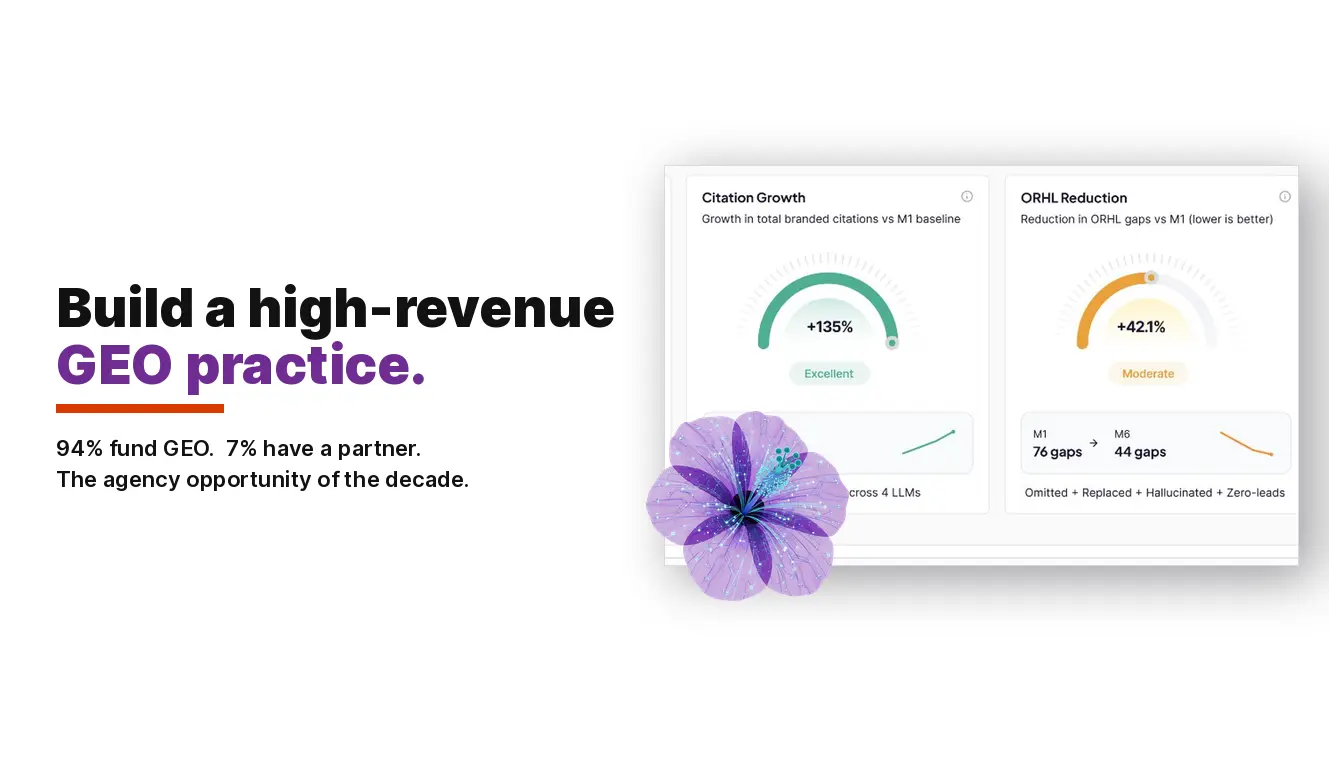
- ORHL gap detection
- Prioritized fixes
- ISO/IEC 27001 certified
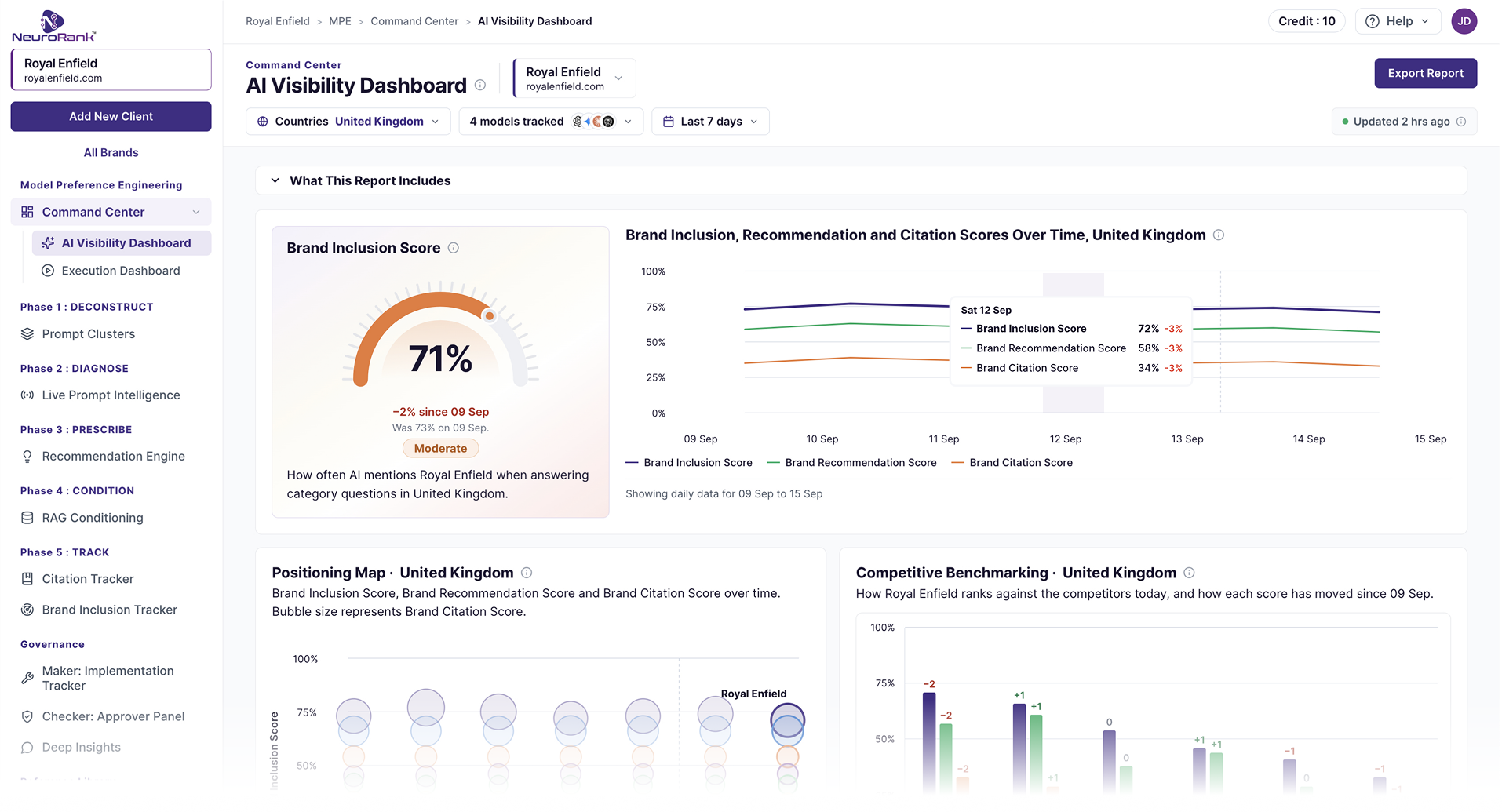
Self-service AI visibility for brand teams and agencies. Track prompts, compare competitors, and segment visibility by product or service.
Widely Tested and Operationally Adopted Across 150+ Global Brands


How AI Sees Your Brand
Four metrics for AI brand visibility.
Does AI include you, recommend you, cite sources that support your brand, and get your facts right?
Brand Inclusion Score
Share of tracked answers that name your brand.
One AI search visibility platform, from answer to fix.
See the answers AI gives on your tracked prompts, the competitors and cited sources in those answers, and what to fix first. Track changes daily across ChatGPT, Gemini, Claude, and Perplexity.
Platform
Every question, answered inside NeuroRank.
Track the questions that matter to your buyers. Compare your visibility with competitors, review cited sources, prioritize fixes, and measure changes by product or service.
Prompt Clusters
Hero Prompts and sub-prompts, built from search demand.
Model Preference Engineering
A generative engine optimization platform, from AI answers to governed fixes.
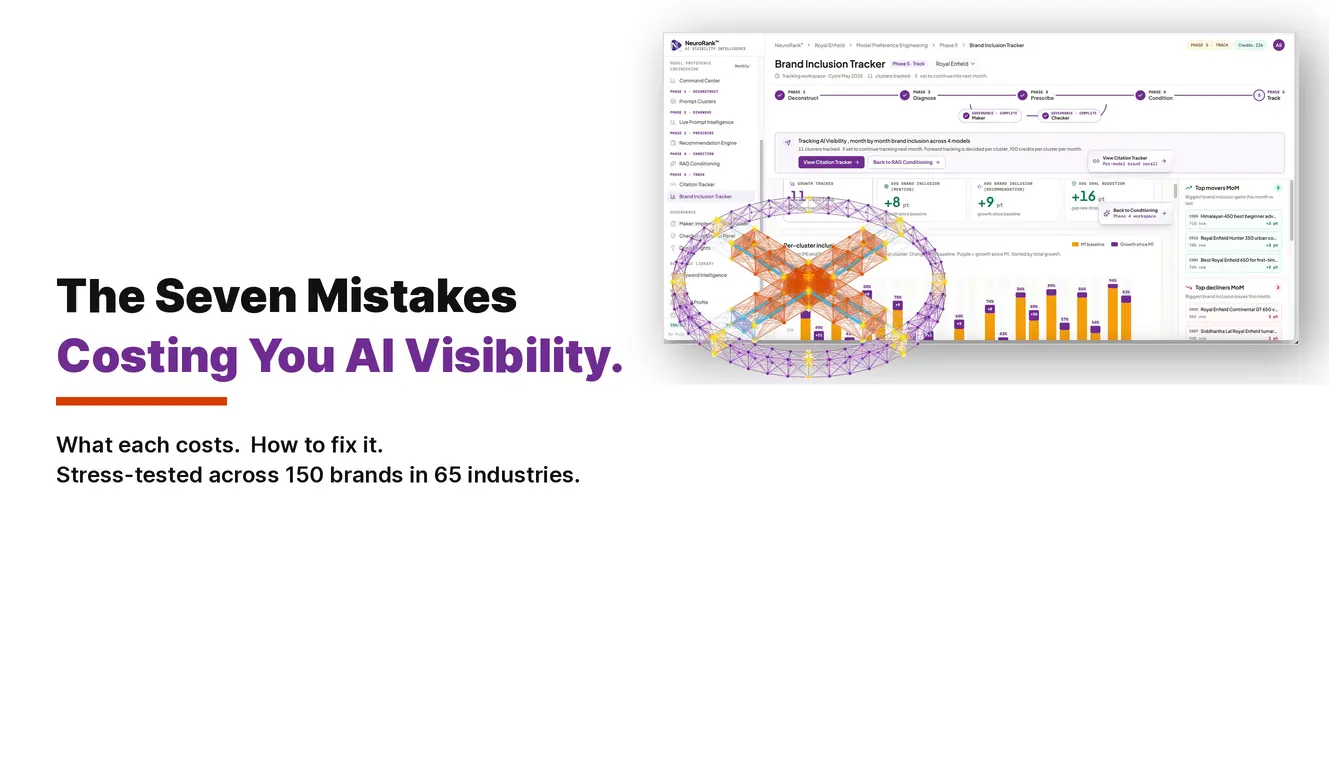
Model Preference Engineering follows five phases: Deconstruct, Diagnose, Prescribe, Condition and Track. NeuroRank captures answers, diagnoses gaps, prescribes fixes, conditions the sources AI systems retrieve through its patent-pending Model Conditioning Loop, and tracks observed change. Your team or agency implements and publishes the fixes.
When Maker-Checker approval is enabled, implemented fixes are reviewed before they proceed to RAG Conditioning, with decisions recorded in an audit trail.
See it on your own brand.
Get a baseline of how AI answers your buyers, or walk through NeuroRank with our team first.
Insights
Historical research covers7,177 ratings.
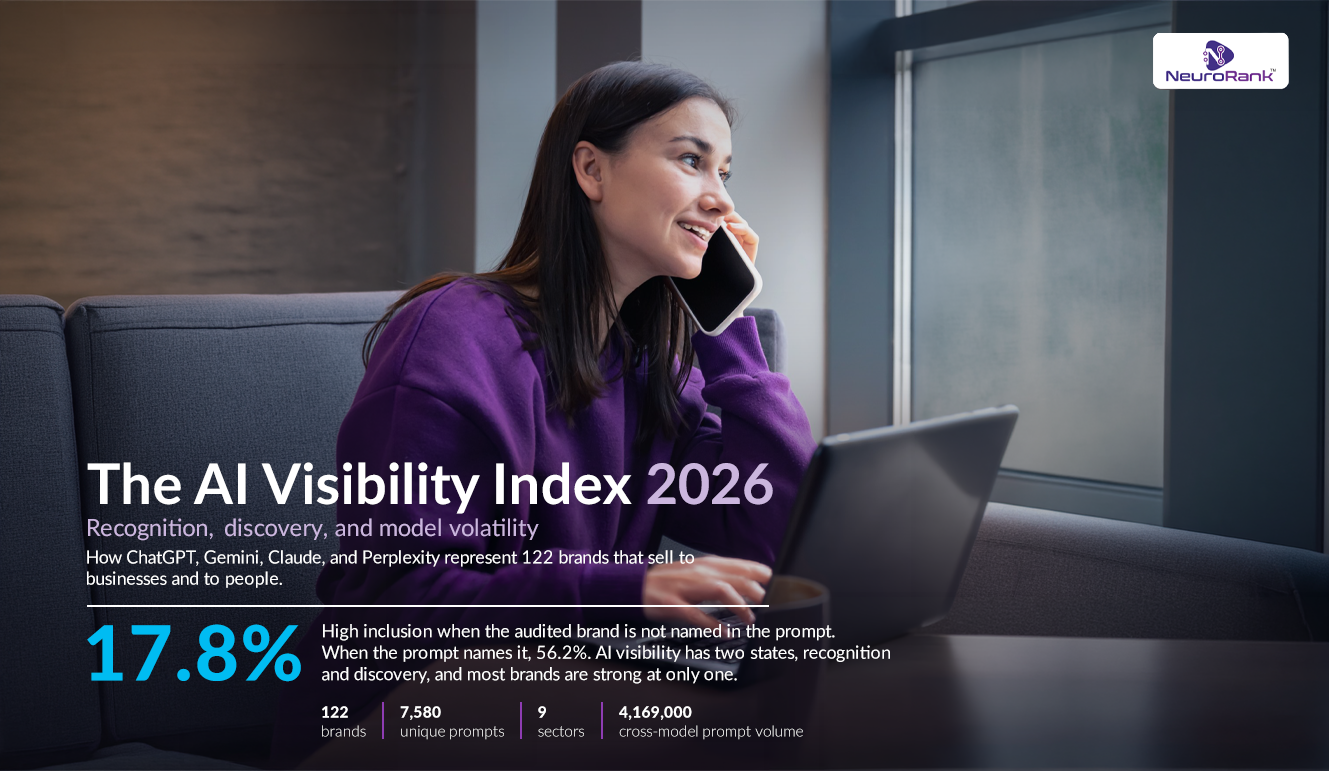
Historical High inclusion ratings compare prompts that name a brand with prompts that do not. These research classifications are separate from the current Brand Inclusion Score. The panels are not matched, so the comparison is descriptive.
- 56.2%
- Historical High inclusion rating on brand-named prompts
- 17.8%
- Historical High inclusion rating on brand-unnamed prompts
- 38.4 percentage points
- Difference between the historical named and unnamed High inclusion rates
Historical research preview: 2,298 brand-named and 4,879 brand-unnamed ratings. The 122 entities include leadership/person entities. Named versus unnamed comparison pending alias QA.
A Team Perspective
The NeuroRank team had the strategic vision. But their ability to execute this complex landscape with low friction on our internal team makes them a true strategic partner.
 VP of Digital Strategy, Bajaj Life
Research
Research on AI brand visibility.
Studies, sector audits, and playbooks from the NeuroRank research team, built on how ChatGPT, Gemini, Claude, and Perplexity represent real brands.
As featured in


Governance
Built for governed and regulated teams.
ISO/IEC 27001 certified
Information security, independently certified.
Patent-pending Model Conditioning Loop
The Model Conditioning Loop at the core of Model Preference Engineering, surfaced as RAG Conditioning.
Maker-Checker approval
When Maker-Checker approval is enabled, implemented fixes are reviewed before they proceed to RAG Conditioning, with decisions recorded in an audit trail.
Fresh-Token Methodology
Fresh, context-isolated sessions reduce carry-over context between tracked runs.
NeuroRank’s AI visibility platform measures how AI answers represent your brand on defined questions. It records the exact response and citations, then separates being named, being recommended, and being cited. Compare ChatGPT, Gemini, Claude, and Perplexity only where the selected plan covers them. A controlled test is a benchmark, not a prediction of every buyer’s experience.
AI brand intelligence is the practice of measuring how AI platforms mention, recommend, and cite a brand, identifying observed gaps, and tracking changes after the brand updates public sources. NeuroRank uses Deconstruct, Diagnose, Prescribe, Condition, and Track. The client or agency implements the recommended changes; NeuroRank measures subsequent responses.
Test the category and brand questions your customers might ask, recording each platform’s answer, date, and available citations. Model Preference Engineering establishes a baseline and tracks later responses on the platforms in your plan. For current coverage, visit https://neurorank.ai/pricing.
LLMO, or Large Language Model Optimization, is the practice of measuring and improving how AI platforms mention, recommend, and cite brands by diagnosing observed representation and conditioning the sources those models retrieve. NeuroRank prescribes source changes for the brand or its agency to implement and measures later answers. It does not alter a provider’s internal model or retrieval system.
NeuroRank is a patent-pending AI visibility intelligence platform and a brand of Pulp Strategy Communications Private Limited. Patent-pending describes the status of its methodology; it is not a claim that a patent has been granted.
NeuroRank records observed mentions, recommendations, citations, and ORHL (Omitted, Replaced, Hallucinated, Zero Leads) gap conditions, then prioritizes source-linked actions for the brand’s team to implement. Its Maker-Checker workflow can document review of submitted changes before subsequent measurement. Compare specific capabilities and plan coverage when evaluating other platforms.
Get your AI visibility Baseline.
See where you stand across ChatGPT, Gemini, Claude, and Perplexity, and what to fix first.