BlogOctober 19, 2026
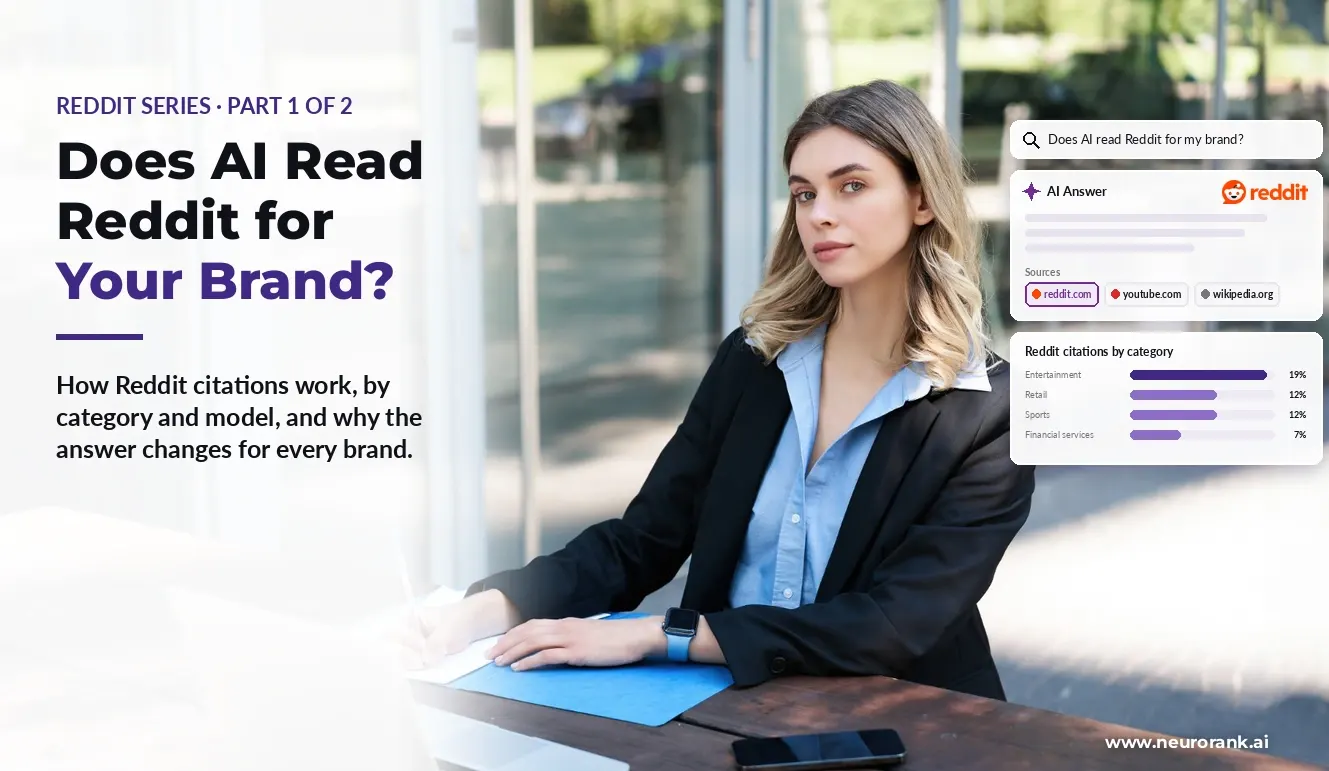
Does AI Read Reddit for Your Brand? Category and Model Decide

Ambika SharmaFounder at Pulp Strategy Communications and NeuroRank.



Founder at Pulp Strategy Communications and NeuroRank.
Subscribe for Newsletters
A workplace can buy catering, cleaning, engineering maintenance, or a combined service contract. Those choices have different delivery obligations. AI search visibility for food services and IFM is valuable when an answer preserves the service bundle and the evidence behind each part.
An institutional food-services provider should be discoverable for the environments it can serve. An integrated facility-management provider needs equally precise scope. The following analysis uses Compass Group India’s published service categories to examine that distinction, then turns it into a procurement evidence plan.
It makes the provider’s scope easier to assess before a formal request for proposal. Check whether the answer identifies catering, housekeeping, technical services, or a combined contract accurately. Evaluate each service against the buyer’s site type and requirements rather than awarding one broad visibility score to the entire group.
An early shortlist can be formed around a workplace problem: feeding shift workers, operating a hospital site, or combining support services across locations. Publish service descriptions that explain the operating environment and delivery boundaries. A generic statement about workplace experience leaves important procurement questions unanswered.
Assess the provider’s evidence at the contract level. A useful record identifies the service bundle, location, responsible operating entity, delivery model, and relevant standards or credentials. A sector maturity score requires a defined sample; the public-source review here establishes information requirements for a buyer.
Check category fit before treating absence as a problem. A specialist food-services provider and a broad IFM operator may belong in different comparison sets. Where a provider meets the brief, inspect whether its public pages make the actual service scope and sector experience clear enough to verify.
Compass Group India lists food services, facility services, and workplace solutions, while its facility-services page describes a distinct set of operational capabilities. The review therefore treats food delivery and facilities work as separate evidence tracks. It supplies no cross-model performance rating for the company.
Read the answer as a draft procurement summary. Identify which service is attributed to which entity and site context. A general company credential should retain its scope, and a contract example should remain attached to the environment it actually describes. Escalate material operational claims to the relevant service owner.
Ask ChatGPT for a supplier brief that separates food services from technical maintenance. Check whether the answer assigns both capabilities to every candidate by assumption. Keep a record of the exact service wording that procurement needs to confirm.
On Gemini, check the legal and operating identity behind the service page. Group membership can establish a relationship while leaving local contract availability to be confirmed. Record the local source that supports the buyer-facing claim.
Use Claude to review a clearly labeled service-scope document in an assisted test. Ask it to distinguish included activities, optional activities, and buyer responsibilities. Compare that comprehension result separately from the provider’s appearance in open-web discovery.
For Perplexity, inspect whether a cited customer story supports the requested industry and service bundle. A source about corporate dining provides different evidence from a source about maintaining a specialized facility.
Better information can help procurement ask more relevant questions and route an inquiry to the right team. Supplier qualification, site assessment, tender evaluation, and commercial negotiation still determine the purchase. Any claimed effect on valuation or sales needs its own measurement evidence.
The comparison below separates service and credential claims that are often compressed into one description. It is designed for fact review, with no assumed assistant risk hierarchy.
Statement to review | Appropriate evidence | Scope that must remain clear |
|---|---|---|
Food-services capability | Current service description and relevant operating evidence | Site type and delivery model |
Technical facilities capability | Approved maintenance service scope | Systems, responsibilities, and local availability |
Credential or certification | Valid certificate and scope | Covered entity, site, activity, and period |
Customer-sector experience | Permissioned case study | Actual contract services and context |
Sources: Compass Group India: Food facility and workplace service categories; Compass Group India: Facility services; accessed October 15, 2026.
Publish a service responsibility map. Give each major bundle a page that identifies deliverables, intended environments, exclusions where material, and the team that can confirm suitability. Connect case studies to the exact service they evidence. Keep credentials within the entity, site, and activity covered by their documentation.
Choose one procurement journey, such as food services for a multi-shift industrial site. Build the source record around the questions that determine supplier fit. After that journey is accurate and measurable, develop a separate record for technical IFM rather than duplicating the catering article under a new title.
NeuroRank can identify where procurement answers confuse service categories, preserve the cited evidence, and assign a source-linked prescription. Service-line experts verify the facts and the client or agency implements approved changes. Repeat measurement then checks that same procurement journey.
Make the public service description precise enough for a procurement manager to place it in the correct work package. That is a more useful outcome than a broad mention that combines responsibilities the buyer will later need to separate.
Stop paying for clicks that do not convert. Benchmark your AI visibility today with the world's most advanced seo ai tools.
Book a Strategic NeuroRank BriefingObtain the required permission and describe the operating problem, service scope, period, and substantiated result at an approved level of detail. An anonymized case can still explain the work when it preserves useful context. Keep confidential commercial terms and personal information outside the published evidence.
Include the site type, service package, operating hours, and any specialist requirements that the buyer needs to assess. Have the responsible procurement and technical owners approve eligibility criteria. The resulting measurement then evaluates supplier fit for that environment rather than a generic list of facility-management companies.