BlogOctober 19, 2026
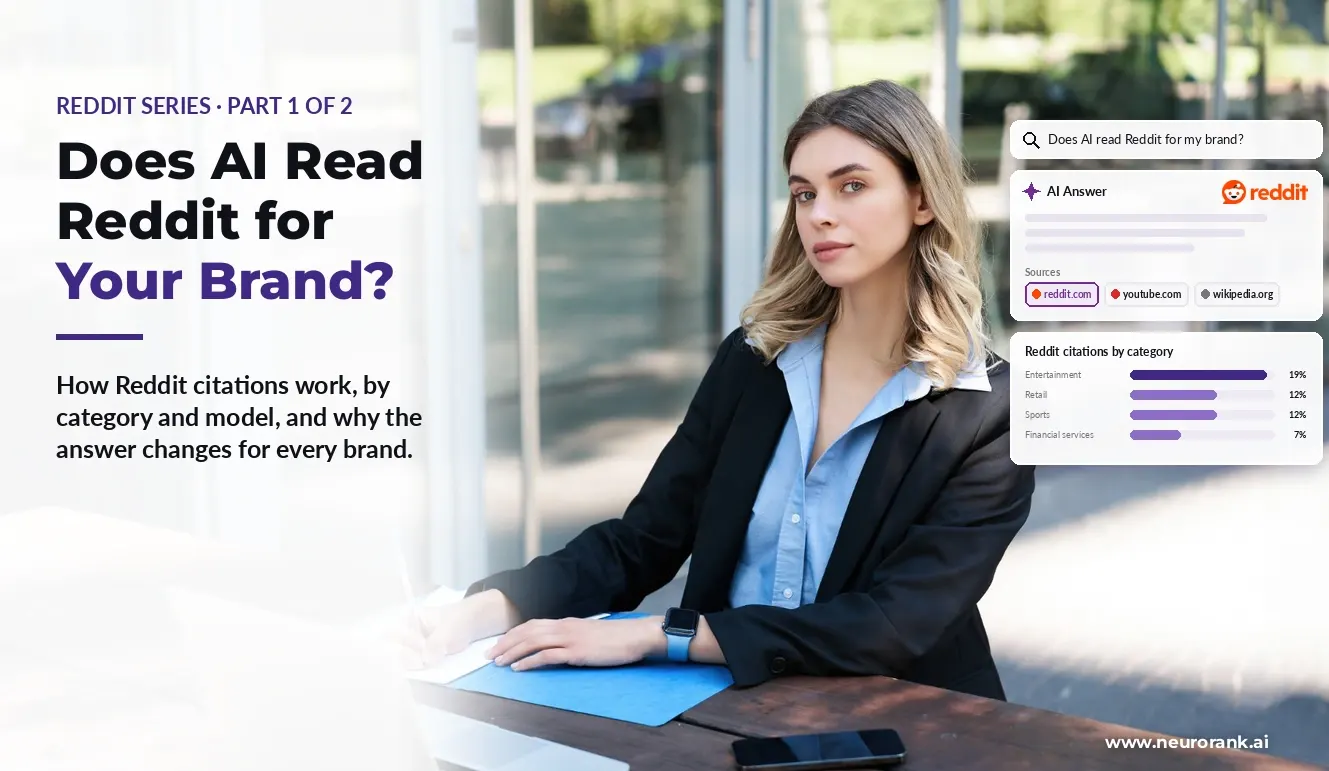
Does AI Read Reddit for Your Brand? Category and Model Decide

Ambika SharmaFounder at Pulp Strategy Communications and NeuroRank.


Founder at Pulp Strategy Communications and NeuroRank.
Subscribe for Newsletters
A tyre recommendation should begin with the vehicle’s requirements and the exact tyre specification. AI search visibility for automotive tyre manufacturing becomes useful when a brand is described at that level, with the correct product, market, size, load index, and speed rating.
Michelin’s published tyre-marking guide provides a checkable example of how several attributes belong to one product identity. This source review develops an evidence approach for marketing and product teams; actual fitment decisions remain subject to the vehicle and tyre manufacturers’ guidance and qualified assessment.
Treat fitment accuracy as a quality condition on visibility. Record whether the answer names an eligible product and retains the identifying attributes needed for a proper check. A recommendation that drops a material specification needs technical review even when the brand appears prominently.
It links discovery to the correct fitment and product information. Measure an eligible product mention separately from claims about compatibility, performance, warranty, and local availability. Each claim has its own source and reviewer.
A buyer can combine vehicle, use, climate, comfort preferences, and budget in one question. Organize the product record so that a broad range description leads to the precise local specification. Marketing benefits from that clarity because the resulting dealer conversation starts with the right product context.
Confirm the vehicle and market requirements before treating a missing brand as an error. For an eligible product, inspect incomplete variant records, old range names, or a global page being used for local availability. The actual captured answer should determine which source needs attention.
The review of Michelin’s tyre-marking guide shows that size, load, speed, range, and other markings describe distinct attributes. Its load and speed guide provides further context. These are verified source distinctions, with no claim of a captured assistant error or sector failure rate.
Evaluate whether the answer preserves the complete specification and the appropriate manufacturer guidance. A range-level performance description should remain at range level; product compatibility requires the particular vehicle and tyre record. Keep a claimed test result attached to its method and conditions.
Useful information can help a buyer reach a dealer with a more precise request. Fitment confirmation, purchases, repeat business, and fleet performance need their own measurement. AI mention rates provide no direct evidence of an IPO effect, valuation change, or a safety or performance outcome.
The matrix below compares fitment-related evidence requirements. It is a review aid and supplies no invented risk ratings for individual assistants.
Claim to assess | Evidence required | Qualification to retain |
|---|---|---|
Vehicle compatibility | Vehicle requirements and exact tyre specification | Market and approved fitment context |
Load or speed statement | Product marking and manufacturer guidance | Exact index and service conditions |
Performance comparison | Applicable test evidence | Product variant, method, and conditions |
Warranty or availability | Current local terms and product record | Eligible product, market, and status |
Sources: Michelin: Tyre markings explained; Michelin: Tyre load rating and speed rating; accessed October 15, 2026.
Build a local specification record for the important vehicle and product combinations. Link the current product details, relevant manufacturer guidance, warranty information, and dealer route. Measure whether the answer preserves those records, then address the source behind a repeated, material mismatch.
NeuroRank can capture tyre-related answers and citations, separate inclusion from specification accuracy, and connect a disputed statement to a source-linked prescription. Product and technical owners verify the facts; the client or agency implements approved updates and reviews the later output.
The useful visibility result is an informed route to the correct specification. Make that standard explicit before counting a tyre recommendation as a successful answer.
Stop paying for clicks that do not convert. Benchmark your AI visibility today with the world's most advanced seo ai tools.
Book a Strategic NeuroRank BriefingUse applicable structured-data properties only where they accurately describe the visible product and its verified attributes. Keep the complete specification available in readable page content. Schema should preserve the real product identity; it should not become a substitute for manufacturer fitment guidance or a claim that the product suits every vehicle.
Save the disputed answer and sources, then have a qualified technical owner compare it with the vehicle manufacturer’s applicable guidance. Correct the relevant explanatory source and route the issue through the brand’s safety review process. A visibility report records the misinformation; it should avoid issuing an unverified replacement pressure.